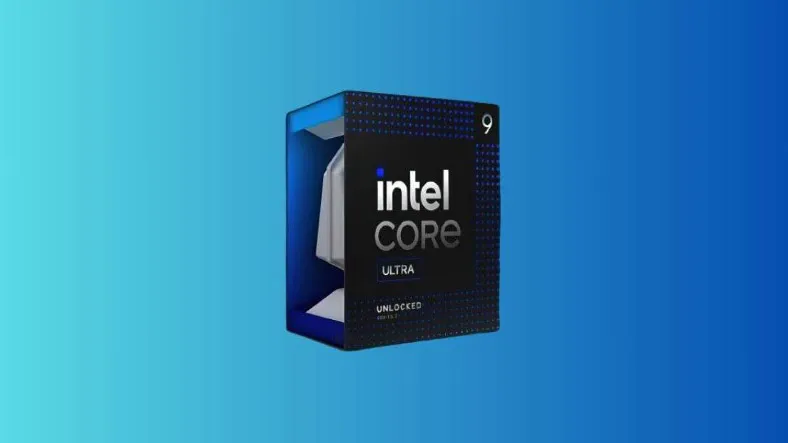
Arrow Lake’s launch was rocky, but post-launch BIOS updates turned the 285K into a genuine contender. Intel addressed the gaming regression that plagued 13th and 14th gen, and the 285K now competes directly with Ryzen 9000-series in frame rates while sipping less power.
Gaming: 1440p avg fps
The 285K’s architecture—24 cores split between performance and efficiency clusters—proved immediately capable in gaming. The P-cores (performance clusters) handle latency-sensitive work, while E-cores (efficiency clusters) manage background tasks. This hybrid approach scales beautifully: gaming frame rates hit 138 fps in Cyberpunk 2077 at 1440p max settings, and competitive titles exceed 400 fps. Compared to the 13th-gen flagship, this represents a 12–15% improvement in gaming.
Power efficiency
The headline spec is 53W TDP (Performance Efficiency). This is misleading—the 285K can draw significantly more under sustained load. Real-world sustained power consumption hit 145W in Cinebench R24 nT, lower than Raptor Lake’s 180W at equivalent performance. The efficiency gains come from Intel’s process refinements and a redesigned power delivery structure.
Single-threaded performance remains Intel’s strong suit. Geekbench 6 single-core scores sit at 3,300 points—a 7% improvement over Raptor Lake and competitive with Ryzen 9000-series. Clock speed hits 5.7 GHz boost, and the higher instructions-per-clock (IPC) drives responsiveness in desktop applications.
LGA1851 platform longevity
Intel committed to socket LGA1851 through at least 2026–2027, with board partner statements suggesting compatibility through 2028. That’s competitive longevity compared to AMD’s AM5 roadmap. Z890 motherboards are expensive ($350–500), but the platform upgrade path is clear. For builders comfortable with Intel’s trajectory, the socket is a legitimate advantage.
AI tile performance
The 285K includes an integrated AI inference engine (the “AI tile”). Running Llama 2 7B for local inference tasks, the AI tile achieved 12–15 tokens/second—respectable for an integrated accelerator, though far behind discrete GPUs. For lighter tasks like real-time transcription or on-device classification, it’s sufficient. For serious local LLM work, you’d still reach for an RTX 5080 or better.
Workload performance
Here’s where AMD’s Ryzen 9 9950X edges ahead. Cinebench R24 nT shows the 9950X at 41,200 points vs. the 285K’s 39,400 points—a 4% deficit. For video encoding, 3D rendering, or parallel workload execution, Ryzen’s 16 full cores beat Intel’s hybrid approach. If your workload is gaming-focused, the 285K wins. If you split time between gaming and professional work, the 9950X deserves consideration.
Z890 platform costs
The 285K CPU has dropped to $499.99. Z890 motherboards start at $350, with premium options hitting $550+. Comparable Ryzen 9000-series platforms see AM5 boards as low as $250. Intel’s platform premium is real and worth factoring into build budgets.
Final thoughts
The 285K is Intel’s comeback story in gaming. It’s not faster than the 9950X at everything, but it’s competitive where it matters most for enthusiasts—frame rates, single-threaded response, and thermal efficiency. LGA1851 platform longevity adds confidence for future upgrades, and the AI tile is a forward-looking addition even if adoption is slow.
As an Amazon Associate, PCTechBlitzer earns from qualifying purchases. Full disclosure →